Arkell's beer is made from only natural ingredients - of all of which are produced in Britain. All you need to brew Arkell's beer is malted barley, water, hops, yeast - and 162 years of experience!
John Arkell grew his own barley in his own fields in the early days of Arkell's and for many years it was turned into malt on the premises but it is now bought in from maltsters in East Anglia where harvested barley is spread on a floor and soaked in water to encourage germination. Almost as soon as it is begun, however, germination is stopped by heating the barley in a kiln. Now the insoluble hard barley grain has changed into easily crushed malt which tastes of Horlicks or Maltesers. It is now ready to be delivered to the brewery.
Also necessary to produce beer is a good supply of water or, as brewers always refer to it, liquor. The brewery has its own well but these days water is drawn off the local supply and mixed with minerals which add flavour and will later help the yeast to grow.
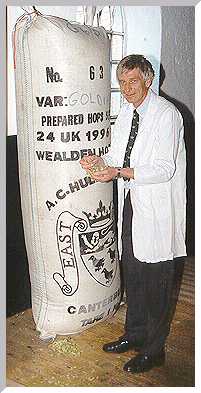
The third ingredient is hops, or rather the flowers of the hop plants. Hops not only give beer its bitterness, but also preserve it. The different varieties of hops help to give bitters their distinctive character and Arkell's always use the finest Fuggles and Goldings hops from Hereford, Worcester and Kent.
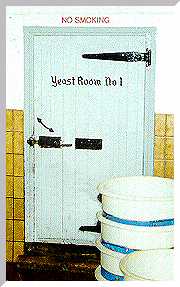 The ingredient that has most effect on the process, however, is yeast, a strange, almost magical organism which grows by consuming natural sugars. The yeast multiplies by around five times its volume and when it is later removed from the top of the beer during fermentation, most will be sold as an important ingredient in various health foods and products like Marmite. Some is recycled, however, and will be used to begin the whole fermentation process all over again.
Arkell's store the yeast in two special Yeast Rooms (see picture, left) and even keep a small portion in a national yeast bank as 'insurance'. The current strain has been used at the brewery since the 1930s and since it accounts for three quarters of the beer's character, is jealously guarded. Arkell's yeast, quite simply, is unique.


 Ingredients

