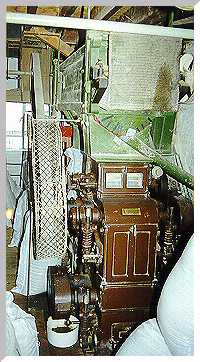
Before the malt can be mixed with the liquor it first has to be ground and a small mill (see picture, left) which once used to be driven by steam, crushes the grains into a coarse flour which brewers call grist. This usually takes place the day before brewing begins.
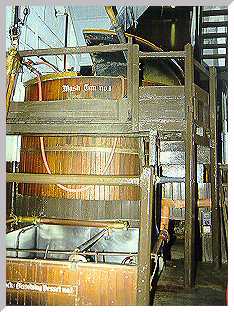
The first part of the brewing process begins around 6am when the grist passes through a device called a steels masher where it is mixed with hot liquor and turns into a porridge-like mixture called goods. Next it is run into the mash tun (see picture, below right), a large drum-like vessel where further liquor will be added and where it will settle for just over an hour. As in all parts of the process, timing to the minute is crucial even though it takes around a week to brew each batch of beer.
 The amount of beer produced varies for each individual product. 3B - the biggest seller - is made in batches of 120 barrels (34,000 pints), whereas other beers can be as little as 25 barrels (7100 pints).
Another important element in brewing is the regulation of the flow of the beer at each stage and the sugary mixture in the mash tun - now called the wort - is carefuly passed through a device called a valentine into a small trough-like vessel called an underback before it is pumped up to a copper, a large, round vessel. Though of no further use in the brewing process, the grains that remain in the mash tun make excellent animal feed.
The sugar content of the wort will define the final alcoholic strength of the beer and needs to be carefully controlled at this stage. To ensure that all the sugar solution gets through to the copper, the wort is sprayed with hot liquor in a process called sparging. It is also time to add the hops and boil up the whole mixture for a further hour in the copper. Now it is called hopped wort and is ready for the next stage of the process.


 The Mash Tun

